Cawmos 2026: Kalasha Peoples Prepare to Celebrate Sacred Winter Festivities from December 7 to 22
The Indigenous Kalasha peoples of Chitral are preparing to celebrate Cawmos, their sacred annual winter festivities, beginning on December 7 and concl

Cawmos 2026: Kalasha Peoples Prepare to Celebrate Sacred Winter Festivities from December 7 to 22
Chitral (Ishpata News): The Indigenous Kalasha peoples of Chitral are preparing to celebrate Cawmos, their sacred annual winter festivities, beginning on December 7 and concluding on December 22, 2026.
One of the most significant religious observances in the Kalasha traditional calendar, Cawmos marks spiritual renewal, the culmination of the agricultural year and the beginning of a new seasonal cycle.
The sixteen-day festivities will feature ancestral rituals, traditional songs, ceremonial dances, purification ceremonies, sacred offerings and communal gatherings across the Kalasha valleys.
A celebration of spirituality and ancestral wisdom
Cawmos is more than a winter festival. It represents the deep spiritual connection of the Kalasha peoples with nature, their ancestral lands, traditional knowledge and religious beliefs.
The festivities are associated with Balumain, a sacred figure in Kalasha religious traditions whose ceremonial arrival holds particular spiritual significance during Cawmos.
Many of the religious ceremonies and cultural practices associated with Cawmos have been transmitted orally from generation to generation, preserving the distinctive Indigenous identity of the Kalasha peoples.
Cawmos 2026: Festival schedule and religious restrictions
While the festivities will officially commence on December 7 and conclude on December 22, specific periods of religious observance will be maintained in Rukmu (Rumbur) and Mumuret (Bumburate).
During these sacred periods, non-Kalasha individuals, including tourists, journalists and other visitors, will not be permitted to visit Kalasha households or enter Kalasha villages to visit community members.
| Dates | Valley | Religious observance |
|---|---|---|
| December 7, 2026 | Kalasha valleys | Commencement of Cawmos festivities |
| December 15–21, 2026 | Rukmu (Rumbur) | Restrictions on non-Kalasha visits to Kalasha villages and households |
| December 18–21, 2026 | Mumuret (Bumburate) | Restrictions on non-Kalasha visits to Kalasha villages and households |
| December 22, 2026 | Kalasha valleys | Conclusion of Cawmos festivities |
These temporary restrictions are rooted in the traditional religious practices of the Kalasha peoples and are intended to preserve the sanctity of sacred ceremonies and spiritual observances.
Visitors are requested to respect these religious boundaries and plan their visits accordingly.
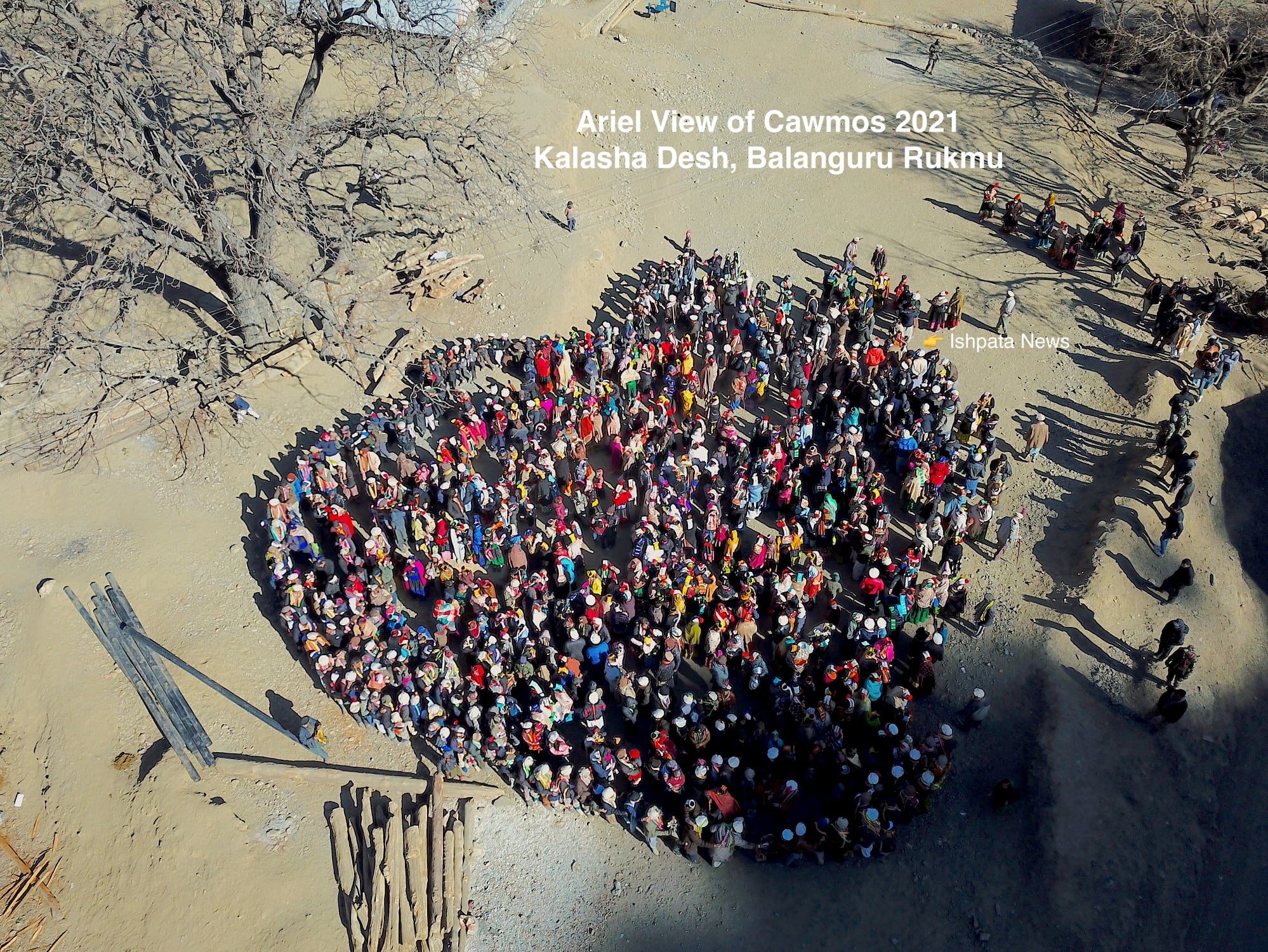
Kalasha community members participating in traditional Cawmos winter festivities. [Ishpata News]
Preserving Indigenous knowledge for future generations
Cawmos provides an important opportunity for younger generations to learn about their ancestral traditions, religious practices, oral histories and collective responsibilities.
Community elders play a central role in transmitting traditional knowledge, while Kalasha women contribute significantly to the preservation of traditional songs, ceremonial practices, cultural expressions and Indigenous identity.
At a time when Indigenous communities face growing challenges from climate change, modernization and cultural erosion, the continuation of Cawmos remains essential to safeguarding the living heritage of the Kalasha peoples.
Guidelines for tourists, media and visitors
Domestic and international tourists, journalists, photographers, vloggers, social media influencers and tour operators are encouraged to observe the following guidelines:
-
Respect the religious restrictions in Rukmu from December 15 to 21 and Mumuret from December 18 to 21.
-
Do not enter restricted Kalasha villages or households during the designated sacred periods.
-
Seek permission before photographing or filming individuals and religious ceremonies.
-
Avoid commercial activities, promotional banners and unnecessary interference in sacred ceremonial spaces.
-
Refrain from playing music or engaging in activities that may disrupt religious observances.
-
Respect the privacy, dignity and cultural values of Kalasha community members.
-
Follow the guidance of religious elders and local community representatives.
Cawmos is first and foremost a sacred religious observance of the Indigenous Kalasha peoples, rather than merely a tourist attraction.
Responsible tourism must recognize the community’s right to observe its religious traditions without external interference.
Celebrating cultural continuity and community unity
As the Kalasha peoples prepare to welcome Cawmos 2026, the festivities serve as a reminder of the importance of cultural diversity, Indigenous rights, religious freedom and intergenerational knowledge transmission.
The celebrations reflect the resilience of a community that continues to safeguard its ancestral identity, language, spirituality and cultural heritage in the Hindu Kush mountains of northern Pakistan.
The festivities will conclude on December 22, 2026, marking the completion of another significant religious and cultural cycle in the Kalasha traditional calendar.
Ishpata News Network extends its warm wishes to the Kalasha peoples for peaceful, prosperous and spiritually fulfilling Cawmos festivities.
Cawmos Mubarak!